A Story That Defied Expectations
Published in 2003—twenty-two years ago—Chimamanda Adichie wrote a story that reverberated through the literary world.
I still remember how I first encountered this book. I was sitting in a literature class when my lecturer mentioned that a novel had just won the Commonwealth Writers’ Prize. Rather than praise it, he was openly critical. He said he couldn’t understand why the book had won, even joking that the author must have consulted a dibia (a sorcerer) to secure the award.
That remark stirred something in me—curiosity. What kind of story provokes such a response? As he continued criticizing its supposed lack of depth and questioned its merit, he added that it would be required reading for our course. I was stunned.
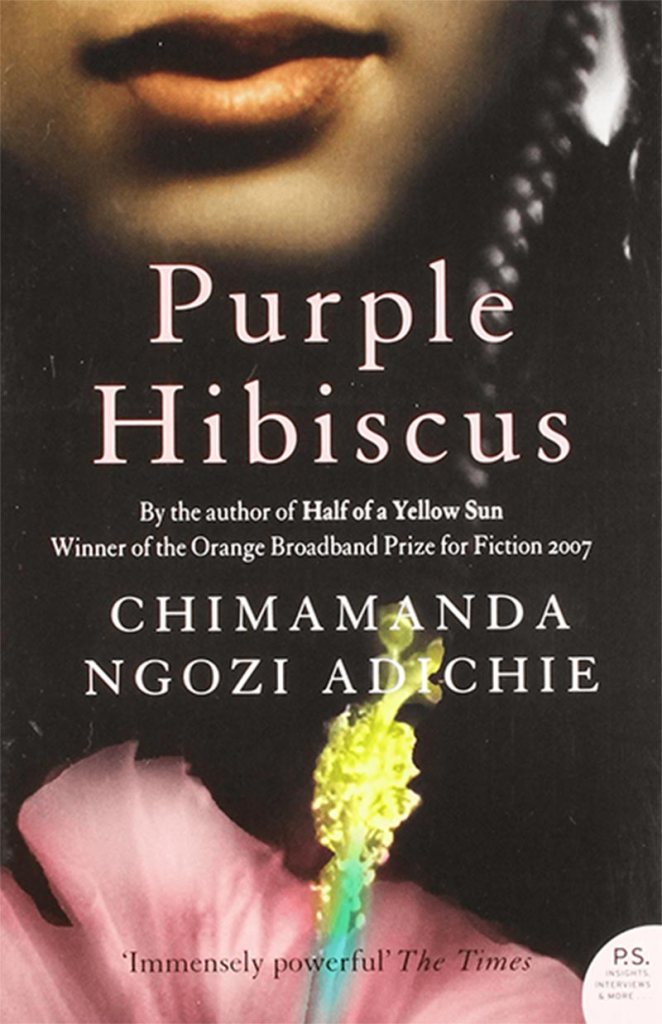
I bought the book expecting to find a shallow narrative that fell short of the intellectual standards often demanded by literary scholars—especially those scrutinizing African literature. But what I found instead surprised me. The book broke me open. It drew me in. It absorbed me completely.
This wasn’t just a novel. It was a departure—a bold step away from traditional African literary norms. Adichie’s decision to center the story around a young girl was, at the time, an unusual choice. Many African writers were preoccupied with politics, revolutions, and the failure of governments. But here was a story that was quieter, more personal—yet deeply political in its own right.
It told what scholars might have dismissed as an “ordinary” story. No grandeur. No overindulgence in literary devices or dense imagery. Just a simple narrative, delivered with clarity and power. Some dismissed it as too plain to be considered literary brilliance.
But they missed something.
Here was a fresh, compelling voice telling a story of an ordinary family in Enugu. Yet, within that “ordinary” story lay a rich mosaic of Nigerian life—politics, religion, economy, education, governance. Every page reflected something intimately familiar to anyone who has lived in or engaged with Nigeria.
Kambili’s Voice: Innocence, Silence, and Awakening
But the real focus of my reflection is the story itself.
Kambili. A young girl living under the oppressive rule of a deeply religious father, known simply as Papa. A girl who suffers physical abuse yet remains desperate for his approval. A girl who doesn’t realize she has a voice—until she begins to spend time with her cousins in Nsukka.
Her journey is both painful and liberating. Kambili’s voice is one of innocence. An innocence that cannot initially grasp the cruelty around her. So innocent that she almost interprets her father’s brutality as love. She is caught between two worlds—one where she yearns to breathe, and one where she is bound by rigid rules disguised as religious devotion.
This tension is especially clear in her relationship with Papa Nnukwu, her grandfather. Her father forbids her and her brother from having any relationship with him, labeling him a “heathen” for following traditional beliefs.
And yet, through Kambili’s eyes, we begin to understand. We begin to question.
Kambili’s story is not just hers—it becomes ours. Her pain, her confusion, her awakening—they mirror experiences shared by many. For anyone who has ever lived under the weight of expectations, endured abuse, or been silenced by systems—be they cultural, religious, or political—Kambili’s voice will resonate.
Characters like Mama and Jaja add more layers. They, too, navigate the same violence, the same silence, the same longing for freedom. Their quiet defiance and enduring strength serve as reminders of the many ways people resist oppression—not always loudly, but with impact.
A Mirror for the Reader: What Will You See?
This book is more than a narrative. It is a mirror. It invites us to see ourselves—not just in Kambili, but in every character. It asks us to reflect on the nature of love, control, belief, silence, and awakening.
It’s a book I would recommend without hesitation.
Why? Because it compels us to think about what it means to be human—and what it should mean.
Themes of family, friendship, faith, and freedom are all present. But Adichie doesn’t preach. She doesn’t tell us what to think. Instead, she opens a window. Through that window, we witness a coming-of-age that is at once personal and political, fragile and bold.
And in the quiet strength of Kambili’s voice, we find a path to our own introspection. We are challenged to ask:
- What beliefs have shaped us?
- What silences do we carry?
- What freedoms do we fear to claim?
This is not just literature. It’s life—examined, questioned, and ultimately reclaimed.

 Book Diaries
Leave a comment